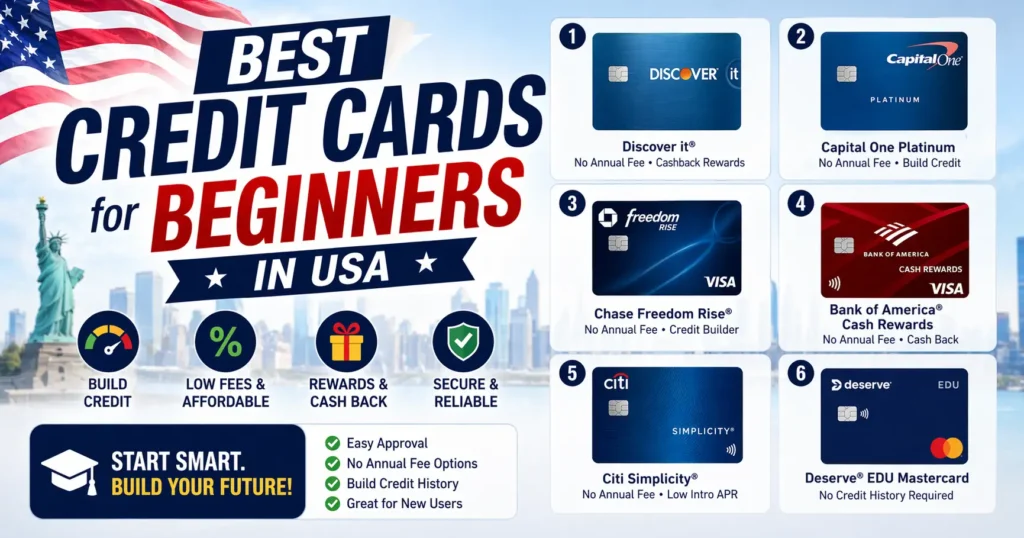
Starting your financial journey in the United States can be confusing, especially when it comes to choosing your first credit card. With so many options available, finding the best credit cards for beginners in USA is important if you want to build a strong credit score and access better financial opportunities in the future.
A good beginner credit card not only helps you manage your expenses but also improves your chances of getting approved for personal loan online, low interest personal loans, and even premium financial products later.
In this guide, you’ll discover the best beginner-friendly credit cards, how to choose the right one, and tips to get instant credit card approval in USA.
Why Beginners Should Get a Credit Card
If you’re new to credit, you might wonder why having a credit card is important. The truth is, your credit history plays a major role in your financial life in the USA.
Using a credit card responsibly helps you build a strong credit score, which is essential when you want to compare personal loans online, apply for a business loan for startups, or even get approved for renting an apartment.
Many beginners also use credit cards to earn cashback and rewards on everyday purchases. Over time, this can save money and provide access to some of the best credit cards with rewards in the market.
Top 5 Best Credit Cards for Beginners in USA
Here are some of the most reliable and beginner-friendly options that offer easy approval, low fees, and solid benefits.
1. Discover it® Secured Credit Card
The Discover it® Secured Credit Card is often recommended for people who have no credit history or want to rebuild their credit score.
It requires a refundable security deposit, which makes approval easier compared to traditional cards. What makes it stand out is that it offers cashback rewards, which is rare among secured credit cards.
This card is a great starting point if you are looking for low risk and want to eventually qualify for unsecured cards and low interest personal loans in the future.
2. Capital One Platinum Credit Card
If you want a simple and straightforward card without paying an annual fee, the Capital One Platinum Credit Card is a solid choice.
It is designed specifically for beginners and offers a chance to increase your credit limit after making on-time payments. This makes it useful for improving your credit score quickly.
Many users prefer this card when they are aiming for instant credit card approval without dealing with complicated reward systems.
3. Chase Freedom Rise Credit Card
The Chase Freedom Rise Credit Card is a good option for students and first-time credit users.
It offers cashback on all purchases, which means you earn rewards even on basic spending like groceries and online shopping. Over time, this can help you transition to premium reward cards.
If your goal is to move toward the best cashback credit cards in the USA, this is a smart place to begin.
4. Petal® 2 Credit Card
The Petal® 2 Credit Card is unique because it does not rely only on your credit score for approval.
Instead, it considers your income and spending habits, making it ideal for those who have no credit history at all. It also comes with no annual fee and no hidden charges, which makes it beginner-friendly.
This type of card is helpful if you are just starting out and want to build eligibility for better financial products like instant personal loan approval online.
5. Capital One QuicksilverOne Credit Card
If you prefer a simple cashback system, the Capital One QuicksilverOne Credit Card is worth considering.
It offers unlimited cashback on every purchase, which means you don’t need to worry about categories or spending limits. While it may have a small annual fee, the rewards can easily make up for it if used properly.
This card is suitable for beginners who want consistent rewards while building their credit profile.
How to Choose the Right Beginner Credit Card
Choosing the right credit card depends on your financial goals and spending habits.
One of the first things to look for is whether the card offers easy approval. Many beginner cards are specifically designed for people with no credit or limited history, which increases your chances of getting approved quickly.
Another important factor is the annual fee. Many of the best beginner credit cards in USA come with no annual fee, which helps you save money while you are still learning how to manage credit.
Interest rates also play a big role. If you plan to carry a balance, it’s better to choose a card with a low interest rate. This can help you avoid high charges and manage your finances more effectively.
Rewards are an added advantage. Even as a beginner, you can earn cashback or points on your everyday spending, which can eventually lead you to the best credit cards available in the market.
How to Get Approved for Your First Credit Card
Getting approved for your first credit card is easier if you follow a smart approach.
Many beginners start with secured credit cards because they require a deposit and have a higher approval rate. Once you build a good payment history, you can upgrade to unsecured cards.
Another useful strategy is to check for pre-approved credit card offers. These offers are based on a soft credit check and do not affect your credit score.
It’s also important to avoid applying for too many cards at once. Multiple applications can reduce your chances of approval and negatively impact your credit score.
If possible, open a bank account with the same institution where you plan to apply for a credit card. This increases trust and improves your chances of approval.
Tips to Build Credit Score Fast
Once you get your first credit card, your main goal should be to build your credit score as quickly as possible.
Always pay your bills on time because payment history is the most important factor in your credit score. Even a single missed payment can have a negative impact.
Try to keep your credit usage below 30% of your limit. For example, if your credit limit is $1,000, avoid spending more than $300 at a time.
Paying your full balance instead of just the minimum amount is another smart move. This helps you avoid interest charges and keeps your financial health strong.
Over time, these habits will make you eligible for better financial products such as low interest personal loans, business loan for startups, and premium credit cards.
Common Mistakes to Avoid
Many beginners make simple mistakes that can damage their credit score.
One of the most common mistakes is missing payments. This can lead to late fees and a lower credit score.
Another mistake is using the full credit limit. High usage signals risk to lenders and can reduce your score.
Some beginners also apply for multiple cards in a short period, which can result in rejection and negatively affect their credit profile.
Avoiding these mistakes will help you maintain a healthy credit history and qualify for the best financial opportunities.
Best Strategy for Long-Term Success
If you want to build a strong credit profile, follow a simple strategy.
Start with a beginner or secured credit card and use it for small, regular purchases. Pay your balance in full every month and maintain low usage.
After six months of consistent usage, you can apply for better cards with higher limits and rewards. This step-by-step approach helps you grow financially without taking unnecessary risks.
Eventually, you will be able to access some of the best credit cards in the USA, along with benefits like travel rewards, premium cashback, and lower interest rates.
Final Thoughts
Choosing the best credit cards for beginners in USA is the first step toward building a secure financial future.
The right card will help you establish your credit history, earn rewards, and unlock better financial opportunities over time. Whether your goal is to apply for a personal loan online, get low interest personal loans, or qualify for premium credit cards, everything starts with your first card.
Take your time, compare your options, and choose a card that matches your needs. With responsible usage, you can quickly build a strong credit score and move toward financial freedom.